This easy tzatziki sauce recipe combines thick Greek yogurt, well-drained cucumber, garlic, olive oil, lemon and fresh dill. The method focuses on moisture control, balanced seasoning and a short rest so your homemade tzatziki sauce tastes clean rather than watery or harsh.
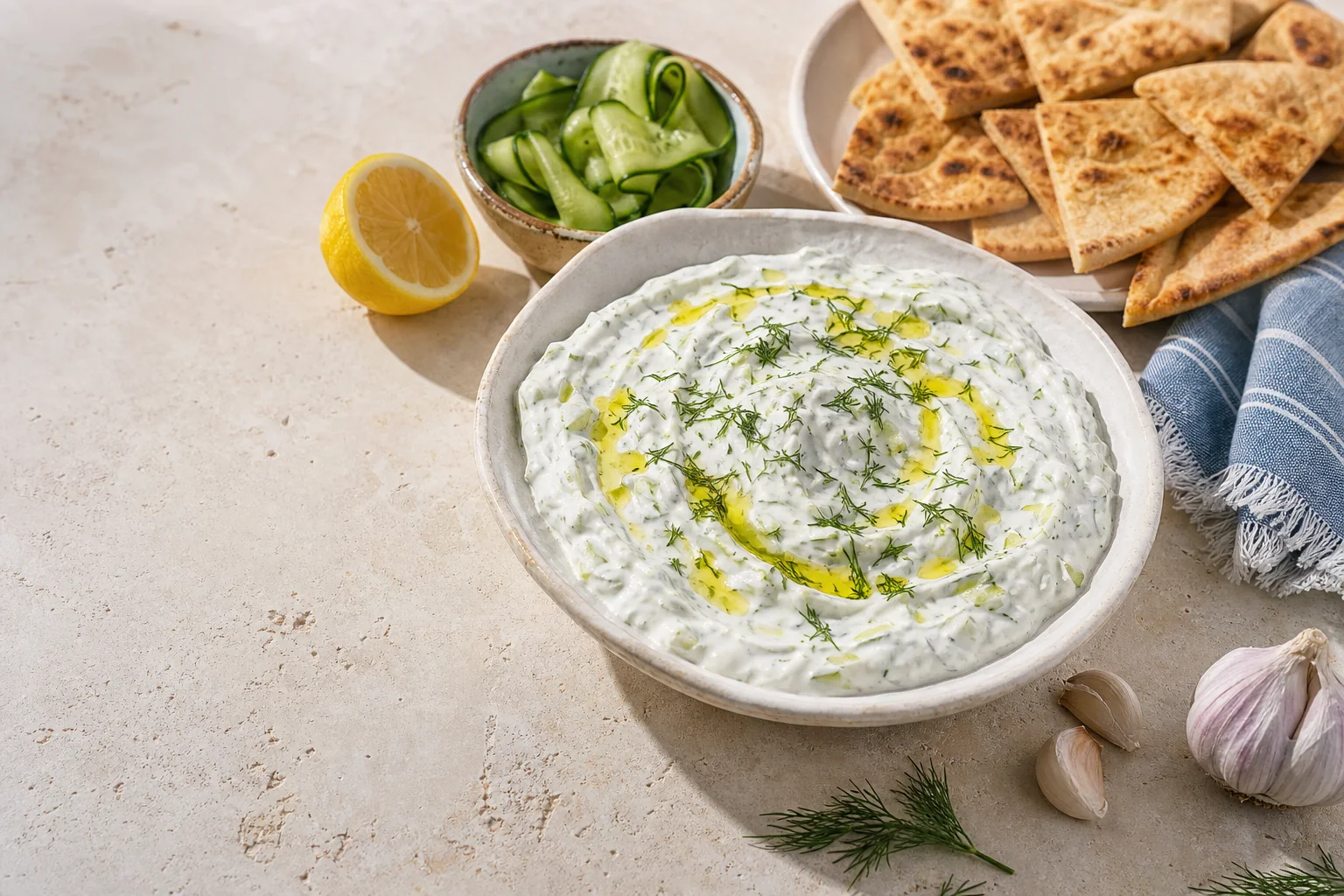
Why This Recipe Works
- Strained yogurt starts thick. Full-fat Greek yogurt provides body and a rounded flavor without extra thickeners.
- The cucumber is salted, rested and squeezed. Removing water before mixing helps the sauce stay spoonable.
- Garlic is finely grated. A fine texture disperses flavor evenly, so fewer cloves are needed.
- Oil and acid are balanced. Olive oil softens the yogurt’s tang while lemon gives a fresh finish.
- A short chill improves the whole bowl. Thirty minutes lets the garlic and herbs settle into the yogurt.
What Is Tzatziki?
Tzatziki is a cool yogurt-and-cucumber sauce associated with Greek cooking. It is usually seasoned with garlic, olive oil, salt and an acidic ingredient such as lemon juice or vinegar; dill or mint may be added. Depending on the meal, it can act as a dip, sauce, spread or component of a mezze plate. Read the broader guide to what tzatziki is and how it is used.
Tzatziki Sauce Ingredients
The ingredient list is short, so texture and freshness matter more than complexity.
- Greek yogurt: 1½ cups (360 g), plain and full-fat
- English cucumber: 1 medium (about 300 g)
- Garlic: 2 medium cloves, finely grated
- Extra-virgin olive oil: 2 tablespoons (30 ml)
- Fresh lemon juice: 1 tablespoon (15 ml)
- Fresh dill: 1 tablespoon, finely chopped
- Fine sea salt: ½ teaspoon, plus more to taste
- Black pepper: ⅛ teaspoon, optional
Ingredient overview
Use a yogurt that can hold a spoon mark. Greek yogurt varies by brand; if yours looks loose, drain it in a fine sieve for 30–60 minutes before measuring. The sauce should use unsweetened, unflavored yogurt.
English cucumber is convenient. Its thin skin and relatively small seeds mean peeling is optional. Persian cucumbers also work; standard field cucumbers usually benefit from peeling and seeding.
Start with two cloves. Raw garlic becomes more prominent as the sauce rests. For a milder sauce, use one clove; for a bold same-day sauce, use three only if the cloves are small.
Ingredient Substitutions
| Instead of | Use | What changes |
|---|---|---|
| Full-fat Greek yogurt | 2% Greek yogurt | Lighter body; choose a very thick brand. |
| English cucumber | Persian cucumbers | Use enough to reach about 300 g before grating. |
| Fresh dill | Fresh mint | Cooler, brighter flavor that pairs especially well with lamb. |
| Lemon juice | Red wine vinegar | Sharper acidity; begin with 2 teaspoons and adjust. |
| Dairy yogurt | Thick unsweetened cultured plant yogurt | Flavor and thickness vary; drain if needed and check that it has no vanilla or sugar. |
How to Make Tzatziki Sauce
- Grate and salt the cucumber. Coarsely grate the cucumber into a bowl. Toss with a small pinch taken from the measured salt and let it stand for 10 minutes.Original process photograph planned: freshly grated cucumber before resting
- Squeeze it very dry. Transfer the cucumber to a clean lint-free kitchen towel or several layers of cheesecloth. Twist and squeeze firmly over the sink until only an occasional drop of liquid remains.Original process photograph planned: cucumber bundled and squeezed in a clean towel
- Mix the sauce. In a medium bowl, combine the Greek yogurt, dry cucumber, garlic, olive oil, lemon juice, dill, remaining salt and optional pepper. Stir until evenly distributed, but do not whip air into the yogurt.Original process photograph planned: ingredients folded together in a ceramic bowl
- Chill, taste and finish. Cover and refrigerate for at least 30 minutes. Stir once, taste, then adjust salt or acidity in small increments. Finish with a thin drizzle of olive oil.Original process photograph planned: finished sauce showing thick spoonable texture
How to Remove Water from Cucumber
Grating breaks cucumber cells and releases water. A brief salt rest draws more liquid to the surface; mechanical squeezing removes it before it can thin the yogurt. Use a clean, tightly woven towel that will not shed fibers. Work in two batches if the bundle is hard to grip.
How to Prevent Watery Tzatziki
- Begin with strained yogurt rather than regular pourable yogurt.
- Measure the cucumber before grating, then remove as much water as practical.
- Do not add extra lemon juice until after the chilled sauce is tasted.
- Keep the sauce covered and cold; stir gently before serving.
- If it is already thin, drain the finished sauce in a fine sieve lined with cheesecloth for 20–30 minutes rather than adding starch.
Fresh Dill vs Mint
Dill gives the sauce a grassy, slightly anise-like freshness and is familiar in many English-language Greek-style recipes. Mint makes the sauce feel cooler and sweeter, which can be excellent with lamb, peas and summer vegetables. Use the same measured tablespoon to start. A half-dill, half-mint blend is a balanced middle ground.
Lemon Juice vs Red Wine Vinegar
Lemon juice creates a round, fresh acidity and adds a light citrus aroma. Red wine vinegar is sharper and more assertive. Either can work; avoid using a full tablespoon of each at the same time. When substituting vinegar, begin with 2 teaspoons, chill the sauce, then decide whether it needs more.
Expert Recipe Tips
- Grate garlic on a microplane-style grater. It distributes more evenly than chopped garlic.
- Measure after choosing the yogurt. A thick base needs less correction later.
- Season in two stages. Add most of the salt before chilling, then finish to taste.
- Use fresh herbs. Dried dill has a different texture and potency; if necessary, start with 1 teaspoon and rest longer.
- Keep the olive oil restrained. Too much can make the sauce feel heavy and mute the cucumber.
Common Tzatziki Mistakes
| Mistake | Why it matters | Better approach |
|---|---|---|
| Skipping the squeeze | Cucumber water quickly loosens the sauce. | Salt briefly and squeeze until nearly dry. |
| Using sweetened yogurt | Sugar and flavoring conflict with garlic and olive oil. | Choose plain, unsweetened yogurt. |
| Adding too much garlic before resting | Raw garlic strengthens over time. | Start with two cloves and adjust on the next batch. |
| Serving immediately | The flavors can taste separate and sharp. | Chill for at least 30 minutes. |
| Over-acidifying | The yogurt already has tang. | Add extra lemon or vinegar only after chilling. |
What to Serve with Tzatziki
Spoon Greek tzatziki sauce alongside chicken souvlaki, grilled lamb, falafel, roasted potatoes or grilled vegetables. Spread it inside gyros, sandwiches and wraps; add a dollop to grain bowls; or serve it as a tzatziki dip with pita and crisp vegetables. See the complete serving and portion guide.
Storage Instructions
Transfer the sauce to a clean airtight container and refrigerate promptly. For conservative home-kitchen guidance, use it within 3–4 days and discard perishable food left at room temperature for more than 2 hours (1 hour when the temperature is above 90°F/32°C). These general limits follow USDA leftovers guidance. Always use your judgment and discard food with an unusual odor, appearance or contamination risk.
Make-ahead instructions
For the best balance, make tzatziki 30 minutes to one day ahead. If preparing components earlier, keep the squeezed cucumber and seasoned yogurt in separate covered containers, then mix them within the safe storage window.
Freezing guidance
Freezing is not recommended for best quality because cucumber and yogurt can release water and separate after thawing. If avoiding waste matters more than perfect texture, freeze a small portion, thaw it in the refrigerator and whisk it gently. Do not refreeze sauce that has been left at room temperature beyond safe limits.
Recipe Variations
Nutrition Information
Estimated per ¼-cup serving: approximately 82 calories, 6 g fat, 3 g carbohydrate, 5 g protein and 175 mg sodium. Nutrition is an estimate based on typical ingredient data; brands, cucumber yield and serving size will change the result.
Frequently Asked Questions
What is tzatziki sauce?
It is a chilled yogurt-and-cucumber sauce commonly associated with Greek cuisine, typically flavored with garlic, olive oil, salt, acid and fresh herbs.
What is in tzatziki sauce?
The core ingredients are thick plain yogurt, cucumber, garlic, olive oil and salt. Lemon juice or vinegar and dill or mint are common additions.
How do you make tzatziki sauce?
Grate and salt the cucumber, squeeze it very dry, then stir it into Greek yogurt with garlic, olive oil, lemon and dill. Chill for at least 30 minutes before adjusting the seasoning.
What yogurt is best for tzatziki?
Plain full-fat Greek yogurt gives the most reliable thick texture. A dense 2% Greek yogurt can also work; drain any yogurt that looks loose.
Do you peel cucumber for tzatziki?
Peeling is optional for thin-skinned English or Persian cucumbers. Peel and seed a thick-skinned standard cucumber if its skin is tough or bitter.
How do you stop tzatziki from becoming watery?
Use strained yogurt, salt and squeeze the grated cucumber thoroughly, and wait until after chilling before adding extra lemon juice.
Is tzatziki sauce healthy?
It can fit many balanced eating patterns and provides protein from yogurt, but healthfulness depends on the yogurt, sodium, portion and the rest of the meal. Read our nutrition guide.
Can you freeze tzatziki sauce?
You can freeze it, but the yogurt-and-cucumber texture often becomes watery or grainy after thawing. Refrigeration is better for quality.
How long does homemade tzatziki last?
Use a clean airtight container, refrigerate promptly and follow conservative general leftovers guidance of 3–4 days. When in doubt, discard it.
Is “zatziki sauce” the same as tzatziki sauce?
Yes. That phrase is a common misspelling; tzatziki is the standard English spelling used throughout this site.
Printable recipe
Easy Tzatziki Sauce Recipe
Thick Greek yogurt sauce with cucumber, garlic, olive oil, lemon and dill.
- Prep: 20 min
- Chill: 30 min
- Total: 50 min
- Yield: 2 cups
- Serving: ¼ cup
Ingredients
- 1½ cups (360 g) full-fat plain Greek yogurt
- 1 medium English cucumber (about 300 g)
- 2 garlic cloves, finely grated
- 2 tablespoons (30 ml) extra-virgin olive oil
- 1 tablespoon (15 ml) fresh lemon juice
- 1 tablespoon finely chopped fresh dill
- ½ teaspoon fine sea salt, plus more to taste
- ⅛ teaspoon ground black pepper, optional
Instructions
- Coarsely grate the cucumber, toss with a pinch of the measured salt and rest for 10 minutes.
- Wrap the cucumber in a clean towel and squeeze firmly until almost dry.
- Stir the cucumber into the yogurt with garlic, olive oil, lemon, dill, remaining salt and optional pepper.
- Cover and chill for at least 30 minutes. Taste, adjust and finish with olive oil.
Notes
Use the thickest plain Greek yogurt available. Drain it first if it pours. Nutrition is estimated. See the full storage and testing notes above.
Recipe Video
A video will be embedded only after an original demonstration is produced. No placeholder video metadata is added to structured data.
Ratings and Comments
Made the recipe? Use the comment form below to leave a genuine star rating and describe your yogurt, cucumber and any substitutions. Ratings appear in recipe structured data only after approved reader reviews exist.
Related Recipes and Guides
Testing Notes
Launch status: editorial formulation prepared July 29, 2026. Hands-on owner test and original process photographs are pending; no tested badge or fake rating is displayed. The first kitchen test should record yogurt brand and fat level, cucumber weight before and after squeezing, garlic clove weight, chilled texture at 30 minutes and texture after 24 hours. Update the “Last modified” date only when a meaningful recipe change is published.
Leave a Reply